
Employment Changes - Act Now

Image: AI Adobe Stock
We have been keeping you updated on the changes coming into law under the Employment Rights Act 2025.
Well, we are just weeks away now from the first of many changes that will be applied to employment in the UK.
In April 2026 Paternity Leave will become a ‘day one right’, allowing employees to give notice of leave from the first day of employment – currently someone must have worked for their employer for 26 weeks to qualify for paternity leave. Statutory maternity, paternity, adoption and shared parental pay will go up from £187.18 a week to £194.32 a week.
Men are legally entitled to up to two weeks of paid Statutory Paternity Leave, paid at a set weekly rate or 90% of average earnings (whichever’s lower), this is separate from more generous company policies. Leave must be taken in one or two-week blocks within the first year of the child’s birth or adoption. Our statutory offer is considered low compared to our European neighbours.
Unpaid Parental Leave also becomes a day-one right (removing the one year’s service requirement).
There is simplification of Trade Union Recognition process for electronic and workplace balloting coming into force in April 2026.
Another major change is the right to Statutory Sick Pay from day one of sickness absence, rather than day four, and from the start of employment. Removal of the lower earnings limit so all eligible employees, regardless of earnings, will have access to statutory sick pay. Employees are to be paid statutory sick pay at a rate of 80% of their normal weekly earnings, or the flat rate, whichever is lowest. We suggest you contact your payroll to ensure these changes are implemented and ready to be used.
Employers facing the need for Collective Consultation during redundancy will find that the maximum period of the collective redundancy protective award will be doubled.
The Fair Work Agency will have established its new enforcement body. The aim being to offer a single place where employers and employees can seek assistance.
New Gender Gap Pay and Menopause action plans will require employers with more than 250 employees to publish their gender pay gap and menopause action plan. These plans are expected to address inequalities and will include outsourced workers in gender pay gap reporting. Voluntary reporting for employers with less than 250 employees will be introduced in April 2026 and it will become mandatory in 2027. We suggest that you put creation of both plans on your agenda.
And finally, Whistleblowing sees a more explicit definition of whistleblowing protections for those workers who make a disclosure relating to workplace sexual harassment, by explicitly stating that such disclosure is a qualifying disclosure and can attract rights under whistleblowing legislation. Updating your whistleblowing policy to reflect this is advised.
Guest Writer
Our Guest Writer – Tony K Silver
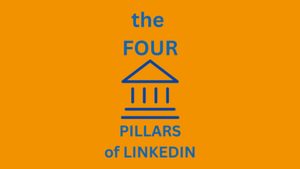
LinkedIn should be a goldmine for small business owners, especially consultants and coaches. It is full of decision-makers, partnership opportunities, and space to build real thought leadership, yet many small business owners use it with little strategy and get nowhere fast.
Most profiles read like a résumé, not a revenue generator. Small business owners often talk about their work, not to their audience, using titles like “CEO” or “Founder” with no mention of who they help or how. If an ideal client lands on a profile and cannot instantly understand what problem is solved for them, attention is lost and opportunities go with it, potentially in under 10 seconds. The solution is to rewrite the headline and About section with the ideal client in mind, speaking directly to their pain points and positioning the business owner as the solution they are actively looking for.
Posting consistently is not enough without strategy. Many treat LinkedIn like Facebook, sharing motivational quotes or random news with no clear call-to-action or link to their services, often following poor or generic advice from the internet. This kind of activity keeps them “busy” but not booked. A simple content strategy built on three pillars is far more effective: show expertise, highlight client outcomes, and share personal stories, strengthened with business analogies that make the lessons memorable. Every post should either educate, inspire, or invite a clear next step toward working with you.
Another major issue is “post and ghost” behavior. LinkedIn is not a set‑it‑and‑forget‑it platform; failing to comment, reply, or send personalised connection messages leaves business owners effectively invisible. Even free members can create visibility by engaging with posts before sending a connection
request. Blocking 15–20 minutes a day to engage intentionally, forming a habit and diarising it, allows owners to comment with insight, acknowledge others’ content, and start non‑pitchy DM conversations. Relationships created this way are what ultimately drive revenue.
Finally, many are talking to the wrong audience. If a network is mainly old coworkers, recruiters, or contacts from a past career, the best offer in the world still goes unseen by today’s ideal clients. Curating the audience becomes essential: sending connection requests to ideal clients, collaborators, and referrers, and not being afraid to remove irrelevant contacts so the network reflects where the business is going, not where it has been.
When messaging is clear, content is strategic, engagement is genuine, and the right network is built, LinkedIn becomes a dynamic marketing tool rather than a static online CV. Small business owners can use their profile to get found in searches, support this with a simple activity strategy, and treat LinkedIn as a database to find and nurture the right people. A few smart, intentional tweaks, guided by proven expertise and aligned with desired outcomes, can shift results surprisingly quickly.
If you want to know what works, but in a way that is based on your desired outcomes, then my guest author is a global expert in doing this: Tony K Silver https://www.linkedin.com/in/tonyksilver/ tony@tonyksilver.com
Switching off from work?

Image: Adobe Stock
Employees all across the UK are working more flexibly and remotely, using multiple IT devices and being able to log in 24/7 to work and it is becoming harder for employees to disconnect from work in a meaningful way.
There is a lot of discussion going on across the country and across our media about whether employees can have a formal and legal right to switch off.
Belgium, Italy, France, Slovakia, Spain and Greece already protect their employees right to disconnect. Australia leads the way on this having already established a disconnect law that came into force in August 2024.
In the UK we don’t have legislation. Research shows that work-related stress is now one of the leading causes of sickness absence and people feel less productive working extra hours. We as employers have an opportunity to ensure clear boundaries between private and professional lives. Establishing appropriate workplace policies will help businesses to further protect employee’s wellbeing, while balancing the business needs.
So, when is it right to disconnect? It’s the time when your employee can disconnect without feeling or fearing criticism for doing so. Things like not having to be checking emails, ignoring calls and being free from digital notifications in the evenings and at weekends should be the norm.
The Working Time Regulations do provide protections around maximum weekly hours and rest breaks. Employers have a duty of care under health and safety law to manage stress and protect employee wellbeing. If a business expects its employees to regularly work beyond their contracted hours, they could find themselves breaching these legal obligations.
If an employer does not set clear expectation they may well find they are opening their business up to unnecessary risk both legal and commercial.
Everyone knows we all need a good work-life balance to stay healthy but there are cases of employees with poor work-life balance in clear line of sight and these contribute to stress, burnout and poor mental health. This in turn almost always means long-term sickness absence and sometimes personal injury claims if an employee’s work-life balance has gone unchecked or you have been unresponsive to requests for help.
Employees who have caring responsibilities at home, disabilities or particular religious observances may be disproportionately affected by out-of-hours pressure. This can expose employers to discrimination claims.
Being constantly available damages morale and is will increase turnover of your
employees and it also will undermine recruitment activities.
Set your employees clear boundaries and create a culture by leading by example. Simplest way is to set clear expectation on working hours. Be clear that responses to emails should be done in work time not personal space. You will need to reassure employees that they need not respond outside work hours unless its urgent – and genuinely so.
Technology allows us to do delayed sending and muting of notifications which can be used to help. People managers should avoid sending non-urgent messages out of working time hours because you’re setting the tone for the wider organisation and that will be the wrong tone.
The right to switch of is becoming a cultural issue as well as a legal one and if you’re an employer who sets boundaries you’re going to help maintain a motivated healthy workforce.
You can also look at having a right to switch of policy so everyone can connect with it.
Try now to make those adjustments before the UK introduces the legal requirement as it will be so much easier.